

Subscribe to Updates

    Get the latest creative news from FooBar about art, design and business.

    What's Hot

    Google paid startup Form Energy $1B for its massive 100-hour battery

    February 26, 2026

    41,000-Year-Old Bones Reveal Chilling Pattern of Neanderthal Cannibalism

    February 26, 2026

    This AI Agent Is Designed to Not Go Rogue

    February 26, 2026
    Facebook Twitter Instagram
    • Tech
    • Gadgets
    • Spotlight
    • Gaming
    Facebook Twitter Instagram
    iGadgets TechiGadgets Tech
    Subscribe
    • Home
    • Gadgets
    • Insights
    • Apps

      Google Uses AI Searches To Detect If Someone Is In Crisis

      April 2, 2022

      Gboard Magic Wand Button Will Covert Your Text To Emojis

      April 2, 2022

      Android 10 & Older Devices Now Getting Automatic App Permissions Reset

      April 2, 2022

      Spotify Blend Update Increases Group Sizes, Adds Celebrity Blends

      April 2, 2022

      Samsung May Improve Battery Significantly With Galaxy Watch 5

      April 2, 2022
    • Gear
    • Mobiles
      1. Tech
      2. Gadgets
      3. Insights
      4. View All

      41,000-Year-Old Bones Reveal Chilling Pattern of Neanderthal Cannibalism

      February 26, 2026

      Antarctica’s Cloud Mystery: What’s Really Floating Above the Ice?

      February 26, 2026

      Aging Isn’t Random, and It Starts Earlier Than You Think

      February 26, 2026

      The End of Language As We Know It? Scientists Challenge 60 Years of Linguistic Research

      February 26, 2026

      March Update May Have Weakened The Haptics For Pixel 6 Users

      April 2, 2022

      Project 'Diamond' Is The Galaxy S23, Not A Rollable Smartphone

      April 2, 2022

      The At A Glance Widget Is More Useful After March Update

      April 2, 2022

      Pre-Order The OnePlus 10 Pro For Just $1 In The US

      April 2, 2022

      This AI Agent Is Designed to Not Go Rogue

      February 26, 2026

      OpenAI Announces Major Expansion of London Office

      February 26, 2026

      Why Sierra the Supercomputer Had to Die

      February 26, 2026

      Who’s Your Daddy? A Chatbot

      February 26, 2026

      Latest Huawei Mobiles P50 and P50 Pro Feature Kirin Chips

      January 15, 2021

      Samsung Galaxy M62 Benchmarked with Galaxy Note10’s Chipset

      January 15, 2021
      9.1

      Review: T-Mobile Winning 5G Race Around the World

      January 15, 2021
      8.9

      Samsung Galaxy S21 Ultra Review: the New King of Android Phones

      January 15, 2021
    • Computing
    iGadgets TechiGadgets Tech
    Home»Spotlight»Sophia Space raises $10M seed to demo novel space computers
    Spotlight

    Sophia Space raises $10M seed to demo novel space computers

    adminBy adminFebruary 26, 2026No Comments3 Mins Read
    Facebook Twitter Pinterest LinkedIn Tumblr Email
    Sophia Space raises $10M seed to demo novel space computers
    Share
    Facebook Twitter LinkedIn Pinterest Email

    As space companies itch to push the most advanced chips into orbit, the problem of cooling those high-powered processors is top of mind.

    “It’s cold in space…[but] there’s no airflow, and so the only way to to dissipate is through conduction,” NVidia CEO Jensen Huang when asked about space-based data centers during his firm’s most recent earnings call.

    Now, Sophia Space has raised $10 million from investors including Alpha Funds, KDDI Green Partners Fund, and Unlock Venture Partners. The company plans to prove out a new approach to passively cooling space computers on the ground, then buy a satellite bus from Apex Space and show that it works in orbit by late 2027 or early 2028.

    Companies like SpaceX, Google, or Starcloud are examining traditional satellite form factors for their proposed space data center constellations, which rely on large radiators to keep chips in optimal thermal condition. But Sophia Space’s founders — CTO Leon Alkalai, CEO Rob Demillo, and chief growth officer Brian Monin — have a different approach.

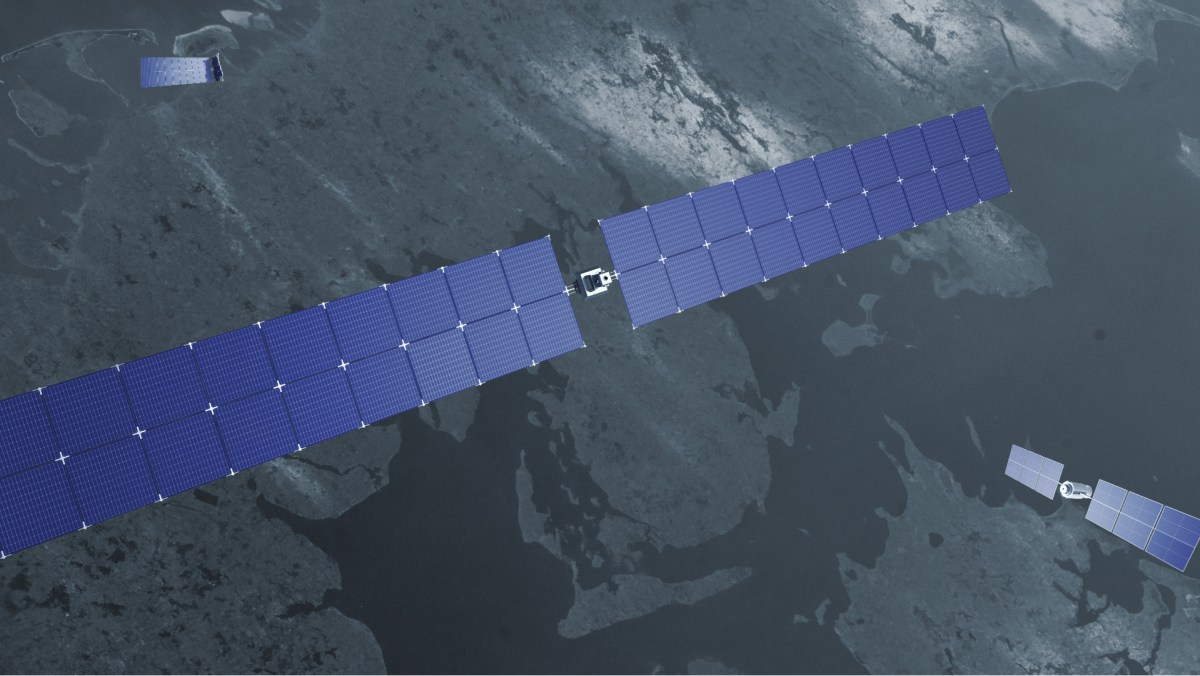
    The company’s tech comes from an unusual source: a $100-million-endowed program at Caltech to develop orbital solar plants that would beam electricity to the Earth below. The researchers ultimately settled on a sail-like structure that is thin and flexible compared to boxy, traditional satellites.

    While technical and regulatory challenges make producing electricity for the Earth difficult, Alkalai, a fellow at the Caltech-managed Jet Propulsion Laboratory, was struck by the idea of using the design to power space-based processors. (Aetherflux, a space solar power startup, has had a similar realization.)

    Sophia, an NVidia partner, has designed modular server racks with integrated solar panels it calls TILES, which are one meter by one meter in area and a few centimeters in depth. By adopting this thin form factor, Demillo says that processors can sit against a passive heat spreader, eliminating the need for active cooling. He expects 92% of the power it generates will go to processing, a significant gain on traditional designs. This design requires, however, a sophisticated software management system to balance activity across the processors.

    Techcrunch event

    Boston, MA
    |
    June 9, 2026

    By the 2030s, Sophia hopes to be building larger space data centers out of thousands of TILEs, envisioning a 50 meter by 50 meter structure delivering 1 MW of computing power. Demillo argues that attempting to build space data centers with less efficient systems will not be economical, and that a single structure rather than a distributed network linked by lasers will be easier to execute.

    First, however, Sophia plans to begin by offering its TILEs to satellite operators that require compute solutions on orbit. Potential partners include earth observation satellites collecting large amounts of sensor data, missile warning and tracking systems that the Pentagon is investing billions of dollars to build, or even increasingly complex communications networks.

    “The dirty little secret of the satellite industry is we’ve got all these amazing sensors up there that produce terabytes, or even petabytes, of data every few minutes, and they throw most of it out because they can’t do the computing on board and they can’t get round trip back and forth to the surface fast enough,” Demillo told TechCrunch.

    AI,Space,Exclusive,orbital computersExclusive,orbital computers,Space#Sophia #Space #raises #10M #seed #demo #space #computers1772135984

    10M computers demo Exclusive orbital computers raises seed Sophia Space
    Share. Facebook Twitter Pinterest LinkedIn Tumblr Email
    admin
    • Website
    • Tumblr

    Related Posts

    Google paid startup Form Energy $1B for its massive 100-hour battery

    February 26, 2026

    So, we’re getting Prada Meta AI glasses, right?

    February 26, 2026

    Threads is testing a shortcut to quickly start DM conversations

    February 26, 2026
    Add A Comment

    Leave A Reply Cancel Reply

    Editors Picks

    FedEx tests how far AI can go in tracking and returns management

    February 3, 2026

    McKinsey tests AI chatbot in early stages of graduate recruitment

    January 15, 2026

    Bosch’s €2.9 billion AI investment and shifting manufacturing priorities

    January 8, 2026
    8.5

    Apple Planning Big Mac Redesign and Half-Sized Old Mac

    January 5, 2021
    Top Reviews
    9.1

    Review: T-Mobile Winning 5G Race Around the World

    By admin
    8.9

    Samsung Galaxy S21 Ultra Review: the New King of Android Phones

    By admin
    8.9

    Xiaomi Mi 10: New Variant with Snapdragon 870 Review

    By admin
    Advertisement
    Demo
    iGadgets Tech
    Facebook Twitter Instagram Pinterest Vimeo YouTube
    • Home
    • Tech
    • Gadgets
    • Mobiles
    • Our Authors
    © 2026 ThemeSphere. Designed by WPfastworld.

    Type above and press Enter to search. Press Esc to cancel.