


A recent demonstration from Mastercard suggests that payment systems may be heading toward a future where software agents, not people, complete purchases. During the India AI Impact Summit 2026, Mastercard showed what it described as its first fully authenticated “agentic commerce” transaction.
In the demo, as reported by Times of India, an AI agent searched for a product, assessed the website, and completed the purchase using stored payment credentials, without the user opening an app or entering card details. The company said the transaction took place inside a secure payment framework designed to verify both the user and the AI acting on their behalf.
The demonstration was controlled, not a public rollout. Mastercard executives told reporters that broader deployment would depend on regulatory approval and ecosystem readiness. Still, the test highlights a change that many enterprises may need to prepare for: the possibility that customers – or corporate systems – will increasingly rely on AI agents to initiate and complete transactions.
Assisted checkout to delegated spending
Digital payments have usually focused on reducing friction for human users through tokenisation, saved credentials, and one-click checkout. Agentic commerce goes further. Instead of helping a user complete a purchase, the system allows software to handle the process from start to finish once permission rules are in place.
The model relies on several building blocks already used in modern payments: identity verification, tokenised card data, and risk monitoring. What changes is who performs the action. If AI agents can act in defined limits, like spending caps or merchant restrictions, checkout may change from a user interaction to a background workflow.
For enterprises, the issue is if software can spend money automatically, procurement rules, approval chains, and audit trails need to account for machine decisions, not human ones. Finance teams may need clearer policies on when an AI agent can commit funds, how liability is assigned if something goes wrong, and how fraud detection should treat automated transactions.
Payment networks position for machine customers
Mastercard is not alone in exploring this direction. Across the payments sector, providers are testing ways to embed transactions into AI-driven tools and digital assistants. The goal is to ensure that when autonomous software begins purchasing goods or services, payment networks remain part of the trust and verification layer.
In public statements tied to the summit demo, Mastercard framed the effort as building infrastructure that allows AI agents to transact safely on behalf of users. That framing points to a broader industry race: not to build smarter AI shopping tools, but to control the authentication systems that make those tools safe enough for financial use.
For banks and fintech firms, the change could affect how customer identity is managed. Traditional authentication often assumes a person is present, entering a password or approving a prompt. Agentic commerce assumes the opposite: the user may not be involved at the moment of purchase. That means identity systems must verify both the account owner’s prior consent and the agent’s authority at the time of transaction.
Merchants may need API-ready storefronts
If AI agents begin acting as buyers, merchant systems may also need to adapt. Online stores built mainly for human browsing may struggle if automated agents become a meaningful share of customers.
To support machine-driven purchases, product catalogues, pricing data, and checkout processes may need to be accessible through structured APIs not only visual web pages. Inventory accuracy, transparent pricing, and clear return policies become more important when decisions are made by software trained to compare options instantly.
This could also influence competition. If agents optimise for price and delivery speed, merchants with inconsistent data or hidden fees may be filtered out before a human even sees them.
Security risks move, not disappear
While agentic commerce promises convenience, it also introduces new risks. A compromised AI assistant with payment authority could execute purchases at scale before detection. Fraud models that look for unusual user behaviour may need updating to distinguish between legitimate automated spending and malicious activity.
Regulators are likely to take a cautious approach. Mastercard’s own comments that the system still awaits approvals suggest that compliance frameworks for AI-initiated payments are still taking shape.
In enterprises deploying AI internally, similar concerns apply. Automated purchasing agents integrated into enterprise resource planning systems could streamline routine procurement, but they also expand the attack surface. Access controls and spending thresholds will matter more when software can execute financial actions without real-time human confirmation.
Where commerce may head
Mastercard’s demonstration does not mean agent-led payments will reach consumers immediately. Yet it offers a glimpse of how commerce may change as AI systems move from advisory roles into operational ones.
If the model matures, the most visible change may be that checkout disappears as a distinct step. Instead of visiting a site and paying, users or companies may set rules, and their software will handle the rest.
For enterprises, the important takeaway is less about Mastercard’s AI technology and more about the direction of travel. As AI agents gain the authority to act, payment systems, identity frameworks, and digital storefronts may need to treat software not as a tool, but as a participant in the transaction.
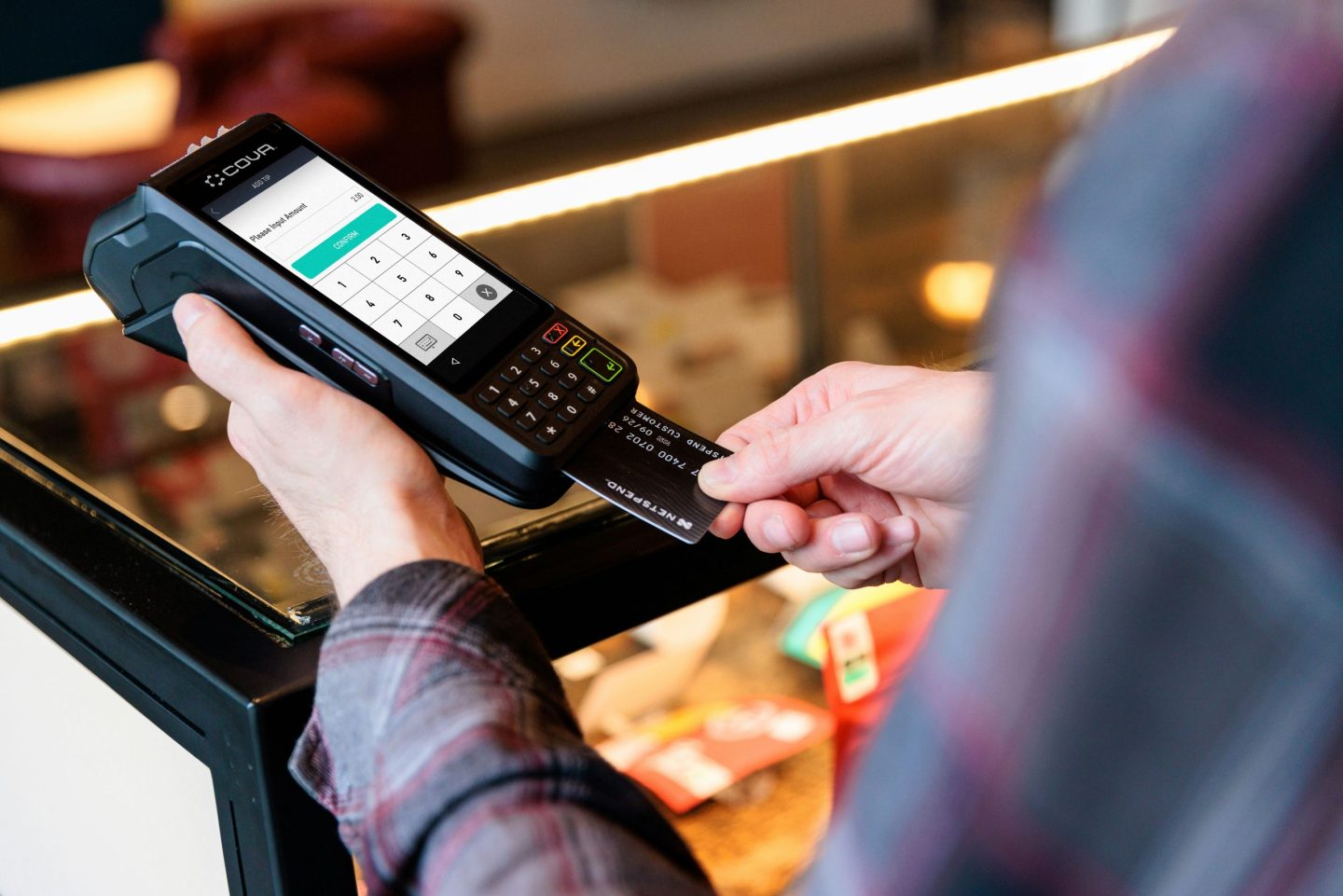
(Photo by Cova Software)

Want to learn more about AI and big data from industry leaders? Check out AI & Big Data Expo taking place in Amsterdam, California, and London. The comprehensive event is part of TechEx and co-located with other leading technology events. Click here for more information.
AI News is powered by TechForge Media. Explore other upcoming enterprise technology events and webinars here.
AI Business Strategy,AI Market Trends,Finance AI,Trust, Bias & Fairness,agentic ai,banking,finance,paymentsagentic ai,banking,finance,payments#Mastercards #payment #demo #points #agentled #commerce1771844216
