

Subscribe to Updates

    Get the latest creative news from FooBar about art, design and business.

    What's Hot

    Scientists Turn Cancer’s Bodyguards Against It

    February 20, 2026

    Exploring AI in the APAC retail sector

    February 20, 2026

    AI Safety Meets the War Machine

    February 20, 2026
    Facebook Twitter Instagram
    • Tech
    • Gadgets
    • Spotlight
    • Gaming
    Facebook Twitter Instagram
    iGadgets TechiGadgets Tech
    Subscribe
    • Home
    • Gadgets
    • Insights
    • Apps

      Google Uses AI Searches To Detect If Someone Is In Crisis

      April 2, 2022

      Gboard Magic Wand Button Will Covert Your Text To Emojis

      April 2, 2022

      Android 10 & Older Devices Now Getting Automatic App Permissions Reset

      April 2, 2022

      Spotify Blend Update Increases Group Sizes, Adds Celebrity Blends

      April 2, 2022

      Samsung May Improve Battery Significantly With Galaxy Watch 5

      April 2, 2022
    • Gear
    • Mobiles
      1. Tech
      2. Gadgets
      3. Insights
      4. View All

      Scientists Turn Cancer’s Bodyguards Against It

      February 20, 2026

      Exploring AI in the APAC retail sector

      February 20, 2026

      Eating More Ultra-Processed Foods Raises Heart Disease Risk by Nearly 50%

      February 20, 2026

      Planting Trees Isn’t Always Good for Birds, Study Finds

      February 20, 2026

      March Update May Have Weakened The Haptics For Pixel 6 Users

      April 2, 2022

      Project 'Diamond' Is The Galaxy S23, Not A Rollable Smartphone

      April 2, 2022

      The At A Glance Widget Is More Useful After March Update

      April 2, 2022

      Pre-Order The OnePlus 10 Pro For Just $1 In The US

      April 2, 2022

      AI Safety Meets the War Machine

      February 20, 2026

      Supreme Court Rules Most of Donald Trump's Tariffs Are Illegal

      February 20, 2026

      Could AI Data Centers Be Moved to Outer Space?

      February 20, 2026

      How to Layer Your Clothes to Stay Warm in Any Season (2026)

      February 20, 2026

      Latest Huawei Mobiles P50 and P50 Pro Feature Kirin Chips

      January 15, 2021

      Samsung Galaxy M62 Benchmarked with Galaxy Note10’s Chipset

      January 15, 2021
      9.1

      Review: T-Mobile Winning 5G Race Around the World

      January 15, 2021
      8.9

      Samsung Galaxy S21 Ultra Review: the New King of Android Phones

      January 15, 2021
    • Computing
    iGadgets TechiGadgets Tech
    Home»Insights»Could AI Data Centers Be Moved to Outer Space?
    Insights

    Could AI Data Centers Be Moved to Outer Space?

    adminBy adminFebruary 20, 2026No Comments3 Mins Read
    Facebook Twitter Pinterest LinkedIn Tumblr Email
    Could AI Data Centers Be Moved to Outer Space?
    Share
    Facebook Twitter LinkedIn Pinterest Email

    Here ε is the emissivity of the object—how effective it is as a radiator (0 < ε < 1), σ is the Stefan-Boltzmann constant, A is the surface area, and T is the temperature (in Kelvin). Since we have temperature to the fourth power, you can see that hotter things radiate much more power than cooler things.

    OK, say you want to play Red Dead Redemption in space. Your computer is gonna get hot—maybe 200 F (366 Kelvin). To keep it simple, let’s say this is a cube-shaped PC with a total surface area of 1 square meter, and it’s a perfect radiator (ε = 1). The thermal radiation power would then be around 1,000 watts. Of course your computer is not a perfect radiator, but it looks like you’d be fine. As long as the output (1,000 watts) is greater than the input (300 watts), it’ll cool down.

    Now say you want to run some modest AI stuff. That’s a bigger job, so let’s scale up our cubical computer with edges twice as long as before. That would make the volume eight times larger (23), so we could have eight times as many processors, and we need eight times as much power input—2,400 watts. However, the surface area is only four times (22) larger, so the radiative power would be about 4,000 watts. You still have more output than input, but the gap is narrowing.

    Size Matters

    You can see where this goes. If you keep scaling it up, the volume grows faster than the surface area. So the larger your space computer, the harder it is to cool. If you were picturing an orbiting Walmart-size structure, like the data centers on Earth, that’s just not going to happen. It would melt.

    Of course, you could add on external radiation panels. The International Space Station has these. How big would they have to be? Well, say your data center runs on 1 megawatt. (Existing AI data centers on Earth use 100 to 1,000 megawatts.) Then you’d need a radiating area of at least 980 square meters. This is getting out of hand.

    Oh, and these radiators aren’t like solar panels, connected by wires. They need systems to conduct heat away from the processors out to the panels. The ISS pumps ammonia through a network of pipes for this. That means even more material, which makes it that much more expensive to hoist into orbit.

    So let’s take stock. Even though we set this up with favorable assumptions, it’s not looking very good. We’re not even taking into account the fact that solar radiation will heat up the computer as well, which will require even more cooling. Or that intense solar radiation will likely damage the electronics over time. And how do you make repairs?

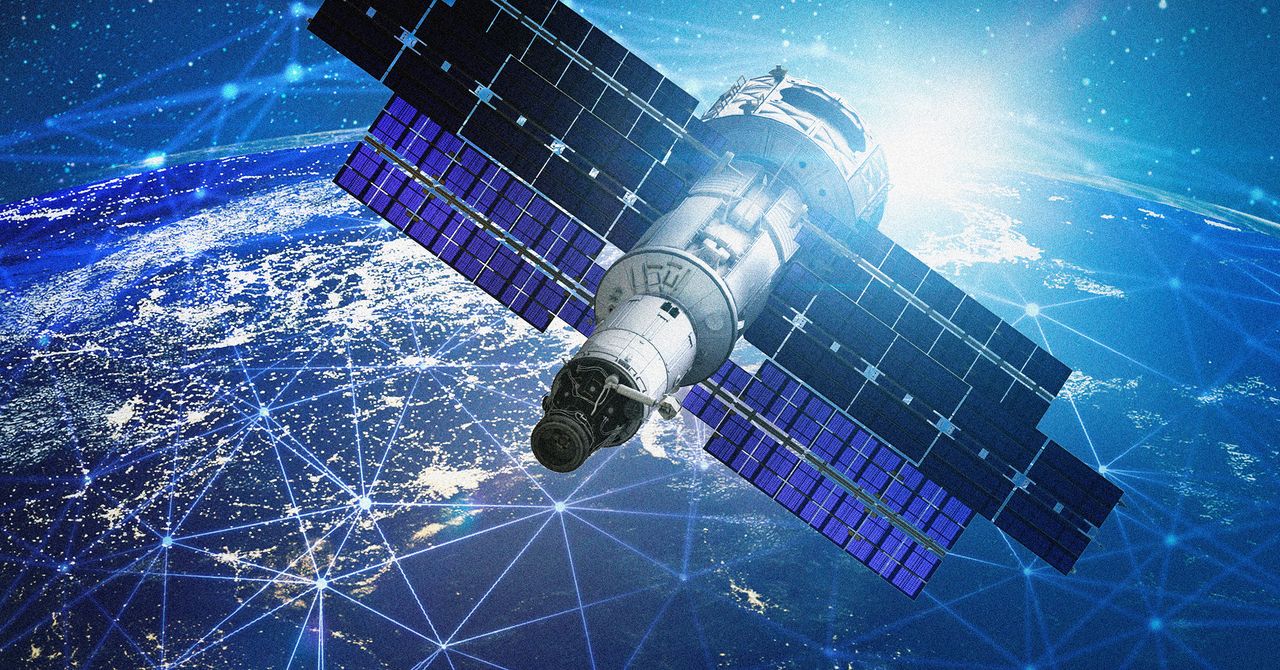
    However, one thing is clear: Because cooling is inefficient in space, your “data center” would have to be a swarm of small satellites with better area-to-volume ratios, not a few large ones. That’s what most proponents, like Google’s Project Suncatcher, are now suggesting. Elon Musk’s SpaceX has already requested FCC permission to launch a million small AI satellites into orbit.

    Hmm. Low Earth orbit is already congested with 10,000 active satellites and some 10,000 metric tons of space junk. The risk of collisions, maybe even catastrophic Kessler cascades, is already real. And we’re going to add a hundred times as many satellites? All I can say is, “Look out below.”

    Science,Science / Physics and Math,Dot Physicsphysics,dot physics,energy,data centers,artificial intelligence,climate change,environment#Data #Centers #Moved #Outer #Space1771601987

    artificial intelligence climate change data centers dot physics energy environment Physics
    Share. Facebook Twitter Pinterest LinkedIn Tumblr Email
    admin
    • Website
    • Tumblr

    Related Posts

    AI Safety Meets the War Machine

    February 20, 2026

    Supreme Court Rules Most of Donald Trump's Tariffs Are Illegal

    February 20, 2026

    How to Layer Your Clothes to Stay Warm in Any Season (2026)

    February 20, 2026
    Add A Comment

    Leave A Reply Cancel Reply

    Editors Picks

    FedEx tests how far AI can go in tracking and returns management

    February 3, 2026

    McKinsey tests AI chatbot in early stages of graduate recruitment

    January 15, 2026

    Bosch’s €2.9 billion AI investment and shifting manufacturing priorities

    January 8, 2026
    8.5

    Apple Planning Big Mac Redesign and Half-Sized Old Mac

    January 5, 2021
    Top Reviews
    9.1

    Review: T-Mobile Winning 5G Race Around the World

    By admin
    8.9

    Samsung Galaxy S21 Ultra Review: the New King of Android Phones

    By admin
    8.9

    Xiaomi Mi 10: New Variant with Snapdragon 870 Review

    By admin
    Advertisement
    Demo
    iGadgets Tech
    Facebook Twitter Instagram Pinterest Vimeo YouTube
    • Home
    • Tech
    • Gadgets
    • Mobiles
    • Our Authors
    © 2026 ThemeSphere. Designed by WPfastworld.

    Type above and press Enter to search. Press Esc to cancel.