

Subscribe to Updates

    Get the latest creative news from FooBar about art, design and business.

    What's Hot

    OpenClaw creator Peter Steinberger joins OpenAI

    February 15, 2026

    Half the World’s Coral Reefs Devastated by Record Ocean Heat

    February 15, 2026

    Anthropic and the Pentagon are reportedly arguing over Claude usage

    February 15, 2026
    Facebook Twitter Instagram
    • Tech
    • Gadgets
    • Spotlight
    • Gaming
    Facebook Twitter Instagram
    iGadgets TechiGadgets Tech
    Subscribe
    • Home
    • Gadgets
    • Insights
    • Apps

      Google Uses AI Searches To Detect If Someone Is In Crisis

      April 2, 2022

      Gboard Magic Wand Button Will Covert Your Text To Emojis

      April 2, 2022

      Android 10 & Older Devices Now Getting Automatic App Permissions Reset

      April 2, 2022

      Spotify Blend Update Increases Group Sizes, Adds Celebrity Blends

      April 2, 2022

      Samsung May Improve Battery Significantly With Galaxy Watch 5

      April 2, 2022
    • Gear
    • Mobiles
      1. Tech
      2. Gadgets
      3. Insights
      4. View All

      Half the World’s Coral Reefs Devastated by Record Ocean Heat

      February 15, 2026

      This Bonobo Just Did Something Scientists Thought Only Humans Could Do

      February 15, 2026

      The Most Common Causes of Maternal Death May Surprise You

      February 15, 2026

      Star Vanishes for 200 Days in One of the Longest Cosmic Dimming Events Ever Recorded

      February 15, 2026

      March Update May Have Weakened The Haptics For Pixel 6 Users

      April 2, 2022

      Project 'Diamond' Is The Galaxy S23, Not A Rollable Smartphone

      April 2, 2022

      The At A Glance Widget Is More Useful After March Update

      April 2, 2022

      Pre-Order The OnePlus 10 Pro For Just $1 In The US

      April 2, 2022

      AI, Fancy Footwear, and All the Other Gear Powering Olympic Bobsledding

      February 15, 2026

      CurrentBody LED Hair Growth Helmet Review: Baby Hairs Abound (2026)

      February 15, 2026

      Google’s AI Overviews Can Scam You. Here’s How to Stay Safe

      February 15, 2026

      The Nothing That Has the Potential to Be Anything

      February 15, 2026

      Latest Huawei Mobiles P50 and P50 Pro Feature Kirin Chips

      January 15, 2021

      Samsung Galaxy M62 Benchmarked with Galaxy Note10’s Chipset

      January 15, 2021
      9.1

      Review: T-Mobile Winning 5G Race Around the World

      January 15, 2021
      8.9

      Samsung Galaxy S21 Ultra Review: the New King of Android Phones

      January 15, 2021
    • Computing
    iGadgets TechiGadgets Tech
    Home»Insights»The Nothing That Has the Potential to Be Anything
    Insights

    The Nothing That Has the Potential to Be Anything

    adminBy adminFebruary 15, 2026No Comments3 Mins Read
    Facebook Twitter Pinterest LinkedIn Tumblr Email
    The Nothing That Has the Potential to Be Anything
    Share
    Facebook Twitter LinkedIn Pinterest Email

    A recent example was published in 2025 by researchers at the European X-Ray Free-Electron Laser Facility near Hamburg, among other institutions. They cooled iodopyridine, an organic molecule consisting of 11 atoms, almost to absolute zero and hammered it with a laser pulse to break its atomic bonds. The team found that the motions of the freed atoms were correlated, indicating that, despite its chilled state, the iodopyridine molecule had been vibrating. “That was not initially the main goal of the experiment,” said Rebecca Boll, an experimental physicist at the facility. “It’s basically something that we found.”

    Perhaps the best-known effect of zero-point energy in a field was predicted by Hendrick Casimir in 1948, glimpsed in 1958, and definitively observed in 1997. Two plates of electrically uncharged material—which Casimir envisioned as parallel metal sheets, although other shapes and substances will do—exert a force on each other. Casimir said the plates would act as a kind of guillotine for the electromagnetic field, chopping off long-wavelength oscillations in a way that would skew the zero-point energy. According to the most accepted explanation, in some sense, the energy outside the plates is higher than the energy between the plates, a difference that pulls the plates together.

    Quantum field theorists typically describe fields as a collection of oscillators, each of which has its own zero-point energy. There is an infinite number of oscillators in a field, and thus a field should contain an infinite amount of zero-point energy. When physicists realized this in the 1930s and ’40s, they at first doubted the theory, but they soon came to terms with the infinities. In physics—or most of physics, at any rate—energy differences are what really matters, and with care physicists can subtract one infinity from another to see what’s left.

    That doesn’t work for gravity, though. As early as 1946, Wolfgang Pauli realized that an infinite or at least gargantuan amount of zero-point energy should create a gravitational field powerful enough to explode the universe. “All forms of energy gravitate,” said Sean Carroll, a physicist at Johns Hopkins University. “That includes the vacuum energy, so you can’t ignore it.” Why this energy remains gravitationally muted still mystifies physicists.

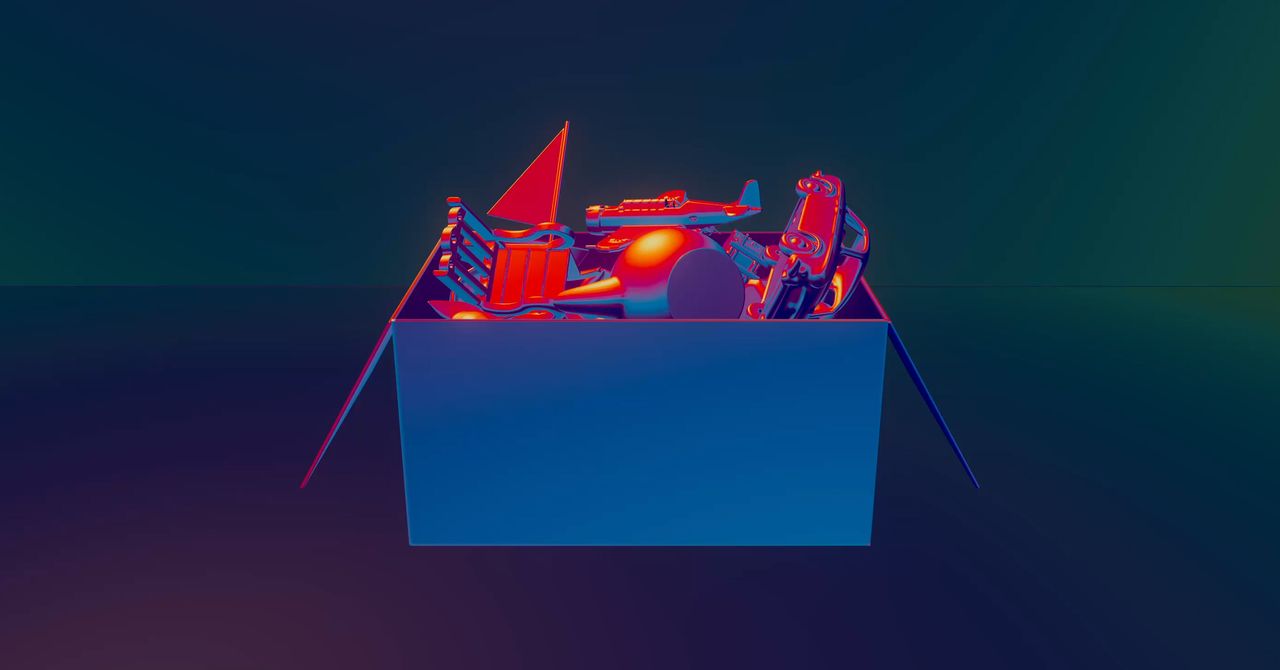
    In quantum physics, the zero-point energy of the vacuum is more than an ongoing challenge, and it’s more than the reason you can’t ever truly empty a box. Instead of being something where there should be nothing, it is nothing infused with the potential to be anything.

    “The interesting thing about the vacuum is every field, and therefore every particle, is somehow represented,” Milonni said. Even if not a single electron is present, the vacuum contains “electronness.” The zero-point energy of the vacuum is the combined effect of every possible form of matter, including ones we have yet to discover.


    Original story reprinted with permission from Quanta Magazine, an editorially independent publication of the Simons Foundation whose mission is to enhance public understanding of science by covering research developments and trends in mathematics and the physical and life sciences.

    Science,Minus Infinityquantum,physics,energy,quanta magazine#Potential1771162677

    energy Physics quanta magazine Quantum
    Share. Facebook Twitter Pinterest LinkedIn Tumblr Email
    admin
    • Website
    • Tumblr

    Related Posts

    AI, Fancy Footwear, and All the Other Gear Powering Olympic Bobsledding

    February 15, 2026

    CurrentBody LED Hair Growth Helmet Review: Baby Hairs Abound (2026)

    February 15, 2026

    Google’s AI Overviews Can Scam You. Here’s How to Stay Safe

    February 15, 2026
    Add A Comment

    Leave A Reply Cancel Reply

    Editors Picks

    FedEx tests how far AI can go in tracking and returns management

    February 3, 2026

    McKinsey tests AI chatbot in early stages of graduate recruitment

    January 15, 2026

    Bosch’s €2.9 billion AI investment and shifting manufacturing priorities

    January 8, 2026
    8.5

    Apple Planning Big Mac Redesign and Half-Sized Old Mac

    January 5, 2021
    Top Reviews
    9.1

    Review: T-Mobile Winning 5G Race Around the World

    By admin
    8.9

    Samsung Galaxy S21 Ultra Review: the New King of Android Phones

    By admin
    8.9

    Xiaomi Mi 10: New Variant with Snapdragon 870 Review

    By admin
    Advertisement
    Demo
    iGadgets Tech
    Facebook Twitter Instagram Pinterest Vimeo YouTube
    • Home
    • Tech
    • Gadgets
    • Mobiles
    • Our Authors
    © 2026 ThemeSphere. Designed by WPfastworld.

    Type above and press Enter to search. Press Esc to cancel.