


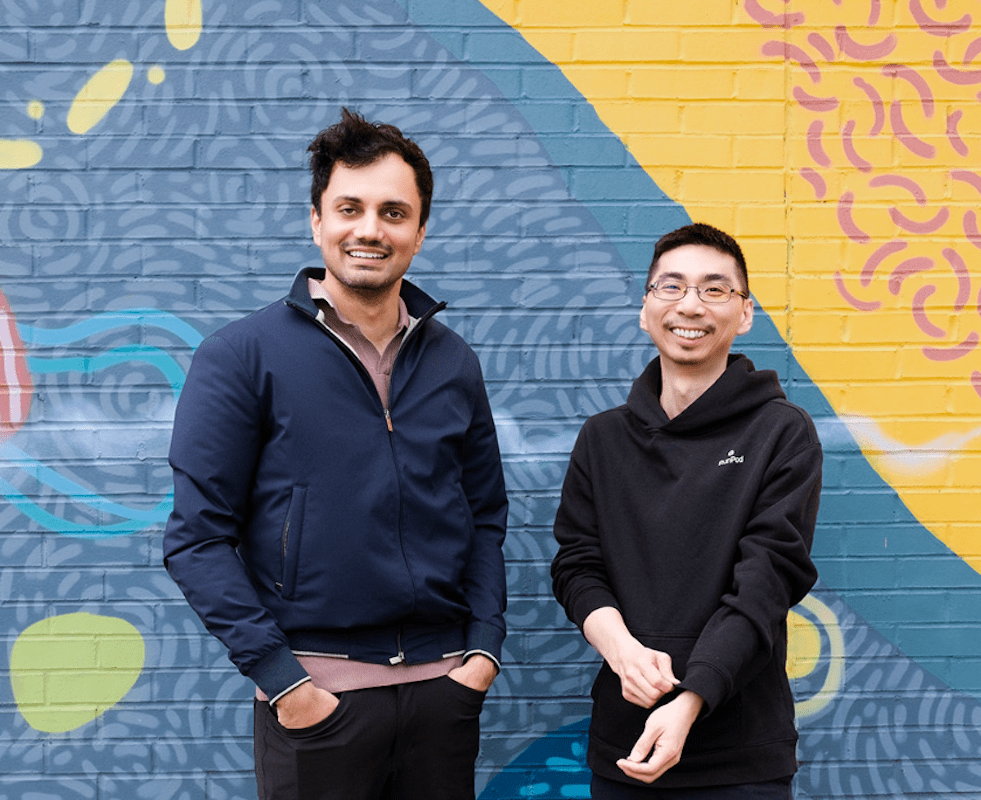
Runpod, an AI app hosting platform that launched four years ago, has hit a $120 million annual revenue run rate, founders Zhen Lu and Pardeep Singh tell TechCrunch.
Their startup journey is a wild example of how if you build it well and the timing is lucky, they will definitely come.
The story includes bootstrapping their way to over $1 million in revenue; landing a $20 million seed round after VC Radhika Malik, a partner at Dell Technologies Capital, saw some Reddit posts; and gaining another key angel investor, Hugging Face co-founder Julien Chaumond, because he was using the product and reached out over the support chat, the founders tell TechCrunch.
It all began in late 2021 when the two friends, who worked together as corporate developers for Comcast, decided the hobby they were doing wasn’t fun anymore.
They had built setups of specialized computers used to generate Ethereum in their respective New Jersey basements. While they did successfully mine a bit of the cryptocurrency, it wasn’t enough to pay back their investment, they said. Plus, mining was going to end after the much-ballyhooed network upgrade called “The Merge.”
On top of that, it was “boring” after a couple of months, Lu said.
But they had talked their wives into letting them spend a good $50,000 on the hobby between them, they estimated. Lu and Singh knew that home harmony depended on finding a way to use those GPUs.
Techcrunch event
San Francisco
|
October 13-15, 2026
The devs had been engaged in machine learning projects at work, so they opted to convert their mining rigs into AI servers. This was before ChatGPT, even before DALL-E 2.
As they repurposed the rigs, “We were seeing how really god-awful the software stack was for dealing with these GPUs,” Lu said. As developers, they found a problem they wanted to solve.
Runpod was born “because we felt that the actual experience of developing software on top of GPUs was just hot garbage,” Lu described.
A few months later in early 2022, they were ready to share what they had built. Runpod is a platform for hosting AI apps, emphasizing speed, easily configured hardware (including a serverless option that automates configuration), and dev tools like APIs, command-line interfaces, and other integrations.
Back in 2021, they only had a few such integrations (like support for popular web app tool Jupyter notebooks). The next problem: finding beta testers.
“As first-time founders, we didn’t really know how to market or how to do anything,” Lu recalled. “So I’m like, all right, let’s just post on Reddit.”
So, they posted in a couple of AI-oriented subreddits. The offer was simple: free access to their AI servers in exchange for feedback. It worked. They landed beta customers, which led to paying customers. Within nine months, they had quit their jobs and hit $1 million in revenue, they said.
Bootstrapping growth
But that led to another problem. “Six months in, business users were like, ‘Hey, I want to actually run real business stuff on your platform. But I cannot run it on servers that are in people’s basements,” Lu said.
It had not occurred to the New Jersey founders to raise capital from VCs. Instead they formed revenue-share partnerships with data centers to grow capacity. But it was stressful. The founders needed to stay three steps ahead.
“If we don’t have the GPUs, the market sentiment, the user sentiment changes. Because when they don’t see capacity from you, they go somewhere else,” Singh described.
Meanwhile, their user base was growing on Reddit and Discord, especially after ChatGPT launched.
VCs were also on the prowl for investments. Malik saw them on Reddit and reached out, their first VC call. But Lu didn’t know how to pitch to an investor. “Radhika was super helpful, even at the first conversation,” he said. She basically explained to him how a VC thinks and told him she’d stay in touch.
Meanwhile, Lu had a business to run that had to pay for itself. “It was almost two years where we really didn’t have any funding,” he said. So Runpod never offered a free tier. It had to at least pay for itself, even if it wasn’t throwing off much profit. Unlike other AI cloud services that began as crypto miners, these founders refused to take on debt, they said.
By May 2024, with AI app fever spreading, their lucky decision to launch AI hosting for devs two years earlier was paying off. Their business had grown to 100,000 developers, and they landed a $20 million seed deal co-led by the VC arms of both Dell and Intel, with participation from big names like Nat Friedman and Chaumond.
They haven’t raised more money since but are now planning to, armed with a business that, they believe, should command a healthy Series A.
Today, Runpod counts 500,000 developers as customers, ranging from individuals to Fortune 500 enterprise teams with multimillion-dollar annual spend, the founders said.
Their cloud spans 31 regions globally and counts customers like Replit, Cursor, OpenAI, Perplexity, Wix, and Zillow as users.
Competition is also fierce. Devs have all the major clouds to choose from (AWS, Microsoft, Google), plus plenty of industry-specific choices like CoreWeave and Core Scientific.
But they also see their place in the world a bit differently — as a dev-centric platform. They don’t see coding ever going away but changing. Programmers will become AI agent creators and operators.
“Our goal is to be what this next generation of software developers grows up on,” Lu said.
AI,Startups,AI data center,Exclusive,runpodAI data center,Exclusive,runpod#cloud #startup #Runpod #hits #120M #ARR #started #Reddit #post1768610358
